

How to Choose a Vacation Home Maintenance Service Without the Stress
Compare Vacation Home Maintenance Services With Confidence
A vacation home maintenance service combines regular property checks, preventive upkeep, and support when something goes wrong while you are away. The right provider helps protect a second home from small issues – such as a slow leak, a tripped breaker, storm debris, or an overgrown yard – before they turn into expensive repairs.
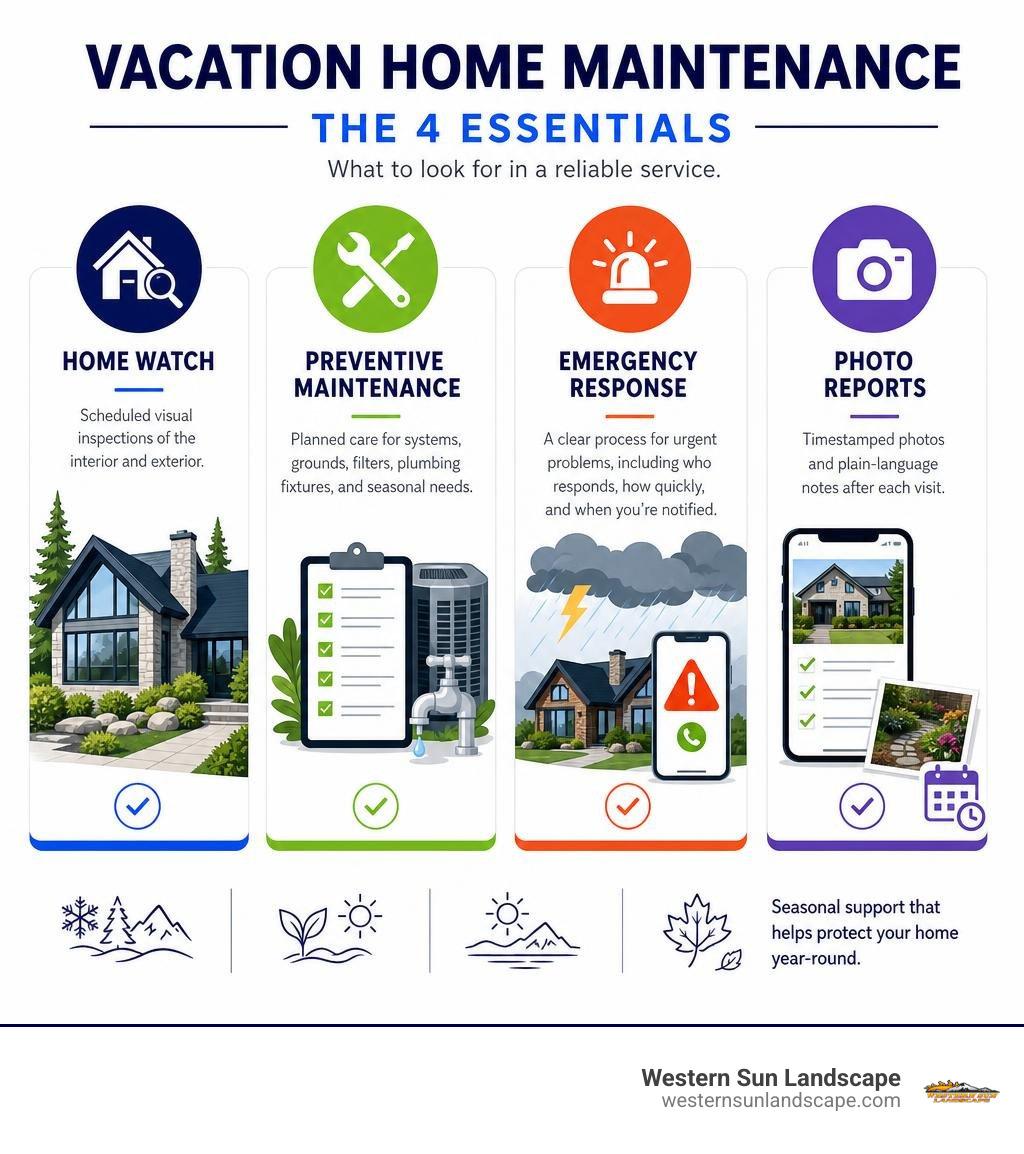
When comparing services, start with these essentials:
- Home watch: Scheduled visual inspections of the interior and exterior for obvious concerns.
- Preventive maintenance: Planned care for systems, grounds, filters, plumbing fixtures, and seasonal needs.
- Emergency response: A clear process for urgent problems, including who responds, how quickly, and when you are notified.
- Photo reports: Timestamped photos and plain-language notes after each visit.
- Seasonal support: Winter weather preparation, spring cleanup, summer grounds care, and fall weatherizing suited to the Salt Lake area.
A basic check-in may be enough for a low-risk property. But a mountain cabin, seasonal home, or house left empty for long periods often needs more frequent oversight and dependable seasonal care. The biggest difference is not just the task list. It is whether the provider communicates clearly, documents what they find, and follows through when conditions change.
Simple vacation home maintenance service glossary:
What Is Included in a Comprehensive Vacation Home Maintenance Service?
When you leave a second home unattended in the Salt Lake Valley or across the Wasatch Front and Wasatch Back, mechanical systems continue running, weather keeps changing, and unexpected breakdowns can occur. A complete vacation home maintenance service delivers peace of mind by acting as your local eyes and hands. Rather than worrying about whether a pipe froze during a sub-zero night in Park City or whether a summer thunderstorm blew down branches in Sandy, professional caretakers conduct systematically planned visits to protect your entire real estate investment.
Comprehensive property care bridges the gap between interior building mechanicals and exterior grounds care. At Western Sun Landscape, we know that maintaining a vacation retreat requires equal attention to exterior curb appeal and interior system health. A full-scope service plan includes routine walkthroughs, ongoing grounds keeping, plumbing and mechanical exercises, and rapid response options. To explore our full suite of care solutions, review our detailed Property Maintenance offerings.
Essential Features of a Vacation Home Maintenance Service
Every high-caliber property care program relies on core features designed to stop minor defects from turning into multi-thousand-dollar insurance claims. Because long vacant stretches accelerate unexpected mechanical failures, structured oversight is critical.
- Visual Inspections: Detailed walkthroughs covering exterior siding, rooflines, foundations, window seals, and entry doors.
- Interior & Plumbing Checks: Flushing toilets, running sinks, exercising garbage disposals, and inspecting supply lines under sinks to maintain plumbing P-traps and stop sewer gas from creeping inside.
- HVAC Oversight: Replacing air filters every 6 to 12 months, checking thermostat connectivity, and inspecting furnace flues prior to winter freeze events.
- Grounds & Exterior Care: Clearing leaf accumulation before snow hits, maintaining lawn health, inspecting irrigation lines, and performing prompt driveway snow plowing.
- Photo Reporting & Documentation: Receiving timestamped, GPS-verified photo records right after every site visit via email or client portals.
Providers across the industry structure these essential features into transparent monthly or annual subscription plans. For instance, options such as tiered home care subscriptions give absentee owners fixed options ranging from basic exterior drive-by security checks to full-service interior caretaking.
Home Watch vs Preventative Care vs Emergency Response
Understanding the functional boundaries between home watch, preventative maintenance, and emergency support ensures you select the right operational coverage for your property.
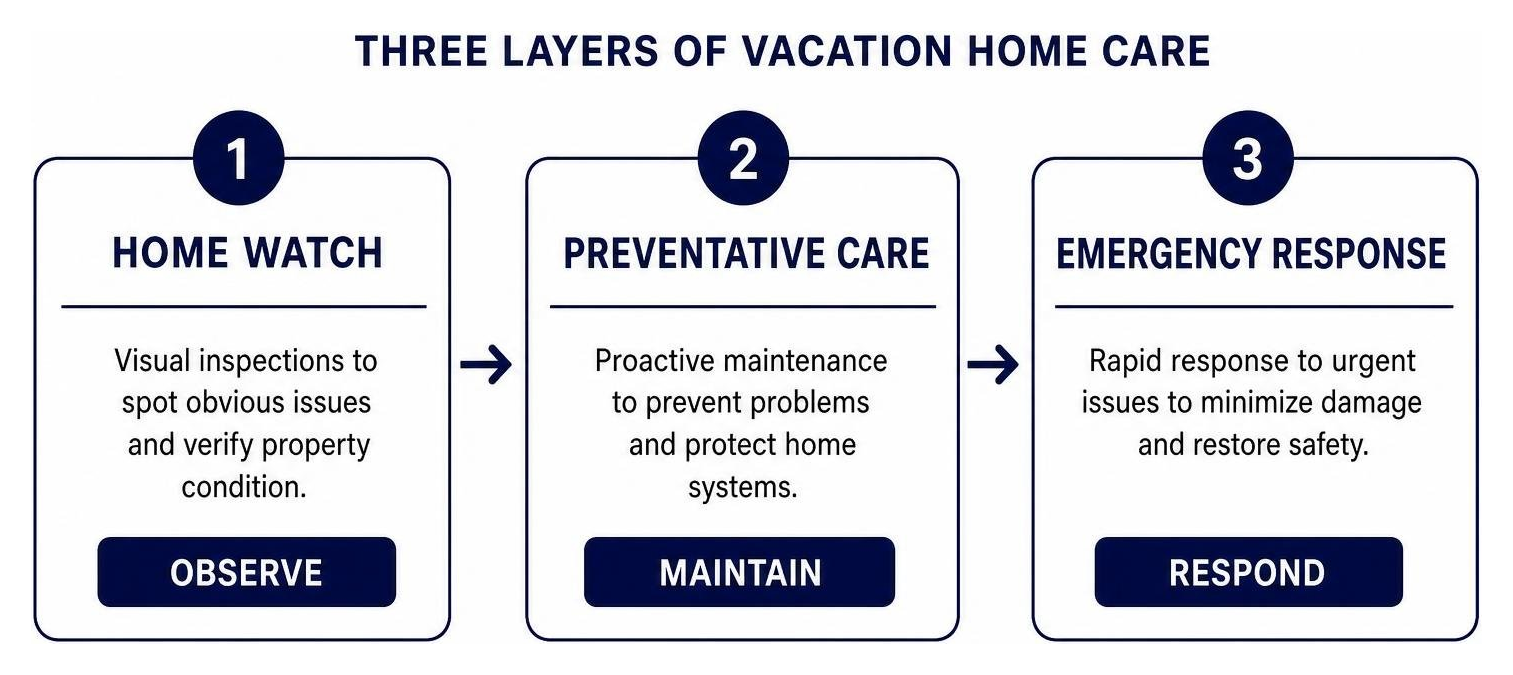
- Home Watch: Defined industry-wide as a visual inspection of a property looking for obvious issues. Home watch inspectors do not dismantle machinery or conduct technical trade repairs; they act as vigilant observers who spot pooling water, tripped breakers, or broken window seals.
- Preventative Care: Scheduled, proactive maintenance that extends the lifespan of major building systems. This includes flushing water heaters, cleaning HVAC drain lines, servicing irrigation valves, and trimming tree branches away from rooflines. As noted in our guide on how residential property protection prevents major structural decay, staying ahead of routine upkeep saves thousands over time.
- Emergency Response: On-call support ready to handle urgent after-hours events. Whether an automated leak detector triggers at midnight or severe wind damages your siding in Draper or Riverton, emergency teams dispatch immediately, shut off main water supply lines, secure doors, and initiate containment protocols.
Combining regular home watch with proactive preventative care and emergency oversight keeps remote owners protected year-round.
How to Compare and Choose a Vacation Home Maintenance Service Provider
Selecting the right partner to care for your second home requires vetting local expertise, operational transparency, and trade capabilities. Entrusting your key custody to a local company means ensuring they possess deep experience with local climate challenges—from heavy Wasatch snow loads to summer drought restrictions in South Jordan and West Jordan.
Critical Criteria for Evaluating a Vacation Home Maintenance Service
When evaluating potential providers, look for these operational non-negotiables:
- GPS Proof of Visit & Photo Reporting: Modern services utilize specialized software (such as Home Watch IT) that captures verifiable GPS time-and-date data. Every report should include clear photos of water heaters, mechanical rooms, electrical panels, and exterior elevations.
- In-House Skilled Trades vs. Subcontracting: Providers who maintain in-house landscaping, carpentry, and handyman teams resolve issues faster and eliminate hefty middleman contractor markups.
- Insurance Vacancy Clause Compliance: Standard homeowner insurance policies frequently feature strict vacancy clauses. Many carriers limit or restrict coverage if a property sits empty for more than 30 to 60 days without documented weekly or bi-weekly professional inspections. Ensure your service provider’s visit logs satisfy your specific insurance policy mandates.
- Transparent Communication: You should receive instant notifications for critical issues alongside immediate repair estimates before any non-emergency work begins.
For luxury homes in regional resort markets, top-tier property maintenance providers demonstrate how blending property upkeep with arrival concierge services ensures groceries are stocked and pools are heated before owners step through the door.
DIY Property Care vs Professional Property Management
Many second-home owners initially attempt to manage property upkeep themselves or rely on casual favors from neighbors. However, long-distance self-management often leads to oversight gaps, unexpected travel stress, and delayed problem detection.
| Criteria | DIY / Relying on Neighbors | Professional Maintenance Service |
|---|---|---|
| Inspection Rigor | Informal, inconsistent, easily forgotten | Standardized checklists, weekly schedules, timestamped photo reports |
| Emergency Response | Dependent on neighbor availability | 24/7 priority dispatch and automated main shut-off protocols |
| Insurance Compliance | Rarely meets formal vacancy clause rules | Documented GPS proof of visit satisfying insurer requirements |
| Trade Expertise | Requires sourcing independent contractors remotely | Integrated in-house landscape, snow, and maintenance teams |
| Financial Reserves | Unplanned emergency repair costs | Predictable monthly service fees & routine budget planning |
Relying on neighbors is widely considered one of the biggest mistakes second-home owners make. Neighbors lack formal technical checklists, thermal imaging tools, and consistent reporting routines. Small water drips or tripped circuit breakers powering full refrigerators can go completely unnoticed for weeks.
In terms of financial setup, second-home mortgages typically require down payments of 10% to 20% (or 20% to 25% for jumbo loans), with lenders requiring two to six months of cash reserves. For investment properties, lenders usually require a minimum of six months’ cash reserves. Partnering with a professional property care team protects those hard-earned cash reserves by stopping minor leaks before they destroy drywall, flooring, and cabinetry.
For homeowners exploring local property support in the Salt Lake region, professional property management delivers reliable long-distance oversight. Additionally, owners who offer short-term rentals frequently partner with specialized local turnover and house cleaning services to keep their properties in pristine condition between guest visits.
Seasonal Maintenance Checklists and Remote Property Preparation
Seasonal climate shifts in Utah demand a proactive, calendar-based care strategy. A home sitting vacant in Alpine, Cottonwood Heights, or Holladay faces radically different challenges in January than it does in July.
| Frequency | Essential Maintenance Tasks | Key Focus Area |
|---|---|---|
| Weekly | Walk exterior perimeter, check entry locks, verify HVAC temperature, inspect under sinks, run water taps & flush toilets briefly | Leak detection & sewer gas prevention |
| Monthly | Replace HVAC air filters, test smoke/CO detectors, inspect water heater for drips, check stored vehicle batteries, check irrigation controllers | System efficiency & battery health |
| Seasonal (Spring/Summer) | Aerate lawns, service sprinkler heads, clear rain gutters, pressure wash patios, inspect exterior paint/siding, schedule AC tune-ups | Curb appeal & storm runoff prep |
| Seasonal (Fall/Winter) | Winterize outdoor hose bibs/irrigation lines, inspect rooflines for ice dam risk, service furnace, clear fallen leaves, coordinate snow removal | Freeze protection & heating reliability |
| Annual | Flush hot water heater tank, inspect chimney flues, service backup generators, clear deep drainage channels, review insurance coverage | Major mechanical longevity |
Preparing Your Second Home for Extended Vacancies and Storms
When shutting down a vacation residence for weeks or months at a time, completing a methodical departure checklist prevents catastrophic surprises:
- Water Isolation: Shut off the main water supply valve unless fire suppression systems require active flow. Open low-tier faucets to drain pressure from lines.
- Plumbing Traps: Ensure all toilets are flushed and sink taps run briefly during routine visits to prevent P-traps from drying out, which allows sewer gas and pests to enter.
- Appliance Prep: Empty all perishable food items from refrigerators and freezers. If unplugging units during long absences, prop doors open to prevent mold and mildew build-up.
- Thermostat Calibration: Set smart thermostats to maintain minimum temperatures (typically 55°F to 60°F during Utah winters) to prevent interior pipe freezes while saving energy.
- Fireplace & Chimney: Close fireplace dampers, clear ashes, and inspect flues before cold weather sets in.
Smart Technology and Emergency Readiness for Absentee Owners
Integrating smart home technology with local caretaker visits offers the ultimate protection for remote owners. Automated devices alert you instantly on your smartphone, allowing your maintenance service to act immediately.
- Automated Water Shut-Off Valves: Smart valves installed on your main water line detect unusual continuous flow and automatically shut off water within seconds, preventing catastrophic flooding.
- Wi-Fi Leak Sensors: Placed beneath dishwashers, washing machines, water heaters, and bathroom sinks, these sensors detect tiny drips before mold forms.
- Smart Thermostats: Monitor real-time indoor temperatures and receive freeze alerts if your furnace loses power during severe Wasatch winter storms.
- Connected Security & Lighting: Automated smart lighting schedules maintain a lived-in appearance, while exterior cameras let you monitor driveway snow accumulation.
To explore how our specialized ground care teams integrate with full-property oversight, visit our complete range of Services.
Frequently Asked Questions about Vacation Home Maintenance Services
What is the difference between home watch and full property management?
Home watch services perform scheduled, non-invasive visual inspections of an unoccupied property to check for obvious problems like leaks, pest entry, furnace failures, or storm damage. They provide photo reports and coordinate repairs but do not manage tenants or bookings. Full property management handles total property operations—including short-term rental listings, guest check-ins, linen turnovers, financial reporting, and comprehensive trade maintenance.
How often should a vacant vacation home be inspected?
Vacant second homes should be inspected at least weekly or bi-weekly. Weekly visits are strongly recommended during winter months across the Wasatch Front and Back due to rapid pipe freeze risks and severe snowstorms. Furthermore, many standard home insurance policies feature strict vacancy clauses requiring documented regular inspections (often every 7 to 14 days) to maintain full coverage in the event of a claim.
How much cash reserves should a second home owner set aside for maintenance?
Financial planners and mortgage lenders recommend setting aside two to six months of total housing expenses (including mortgage, taxes, insurance, and routine maintenance fees) in cash reserves for a second home. For investment properties or short-term rentals, lenders often require a minimum of six months in cash reserves to ensure you can comfortably handle unexpected major mechanical repairs or seasonal occupancy lulls.
Conclusion
Owning a vacation home along the Wasatch Front, in the Salt Lake Valley, or across the Wasatch Back should be a source of relaxation, family memories, and long-term financial equity—not constant worry over unexpected leaks, overgrown yards, or ice damming. By partnering with a dedicated vacation home maintenance service, you transform long-distance ownership from a stressful list of chores into a seamless, worry-free experience.
Choosing a provider who combines structured visual inspections, transparent photo reporting, smart technology integration, and deep local expertise ensures your asset remains pristine in every season. As detailed in our guide on Why You Need a Professional House Maintenance Service Today, proactive care is always far more affordable than emergency repairs.
With over 45 years of local Utah expertise and a 4.9-star Google rating, Western Sun Landscape delivers complete year-round grounds care, seasonal cleanups, and property upkeep tailored to Utah’s unique climate. Protect your investment today—explore our full Property Maintenance solutions or Contact our expert team to customize a care plan for your second home.


