

How to Master Your Vacation Rental Maintenance Checklist This Year
The Business Case for Strategic Vacation Rental Maintenance
The good news is that staying ahead of repairs doesn’t require living on-site or spending every weekend with a toolbelt. It requires a repeatable system: a structured vacation rental maintenance checklist, clear seasonal schedules, and the right local partners to keep your property running like clockwork.
In this guide, we’ll walk through how to build a high-performing upkeep strategy that protects your earnings, keeps your property in peak condition, and ensures every guest steps into a five-star experience.
Managing a short-term rental isn’t like managing a long-term residential lease. A family living in a home experiences predictable, low-impact wear and tear. A vacation rental hosting hundreds of different guests each year operates much more like a boutique hotel. Guests use appliances constantly, adjust HVAC settings repeatedly, and expect absolute perfection.
When maintenance breaks down, your bottom line takes an immediate hit.
Common Guest Complaints and Search Ranking Losses
Data shows that 72% of guest complaints reference an issue that was actually known before check-in but was never formally assigned or resolved. When a guest arrives to find a leaking toilet, a freezing air conditioner in December, or a broken oven, the impact extends far beyond a single refund.
Algorithms on major booking portals like Airbnb and Vrbo heavily penalize listings with lower review scores or mid-stay cancellation logs. A single maintenance-related complaint review can drop your property’s search ranking for weeks. Because search position dictates booking volume, the revenue hit from a ranking drop easily runs 5 to 10 times the cost of the original physical repair.
Proactive Care vs. Reactive Repairs: Hidden Cost Breakdown
Choosing proactive maintenance over reactive emergency fixes saves thousands of dollars annually. When an HVAC compressor fails at 10 PM during a peak weekend, you face steep emergency dispatch premiums (often $150 to $300 over standard callout rates), temporary guest relocation costs, and potential night refunds.
Financial planning models suggest setting aside 10% to 15% of your monthly rental revenue or 1% of your property’s total value annually for ongoing upkeep and capital reserves.
| Maintenance Approach | Average Service Cost | Guest Impact | Algorithmic & Revenue Risk |
|---|---|---|---|
| Proactive HVAC Service | $80 – $150 (Scheduled Tune-up) | None (Completed during vacant windows) | Zero risk; optimizes energy efficiency |
| Reactive HVAC Repair | $400 – $1,200+ (Emergency Call + Dispatch Premium) | High (Relocation, complaints, heat/AC outage) | Severe risk; potential listing rank drop |
| Proactive Plumbing Check | $15 – $50 (Flapper/Seal Replacement) | None | Zero risk |
| Reactive Plumbing Leak | $1,500 – $5,000+ (Water Damage & Subfloor Rot) | Extreme (Property off-market for weeks) | High; major revenue loss during downtime |
A Step-by-Step Upkeep Schedule for STR Properties
To manage upkeep without feeling overwhelmed, break tasks down into manageable cycles: turnover checks, monthly tasks, and seasonal overhauls.

Turnover Inspections and Monthly Preventative Checks
The “turnover gap” occurs when property cleaners spot minor issues but communicate them through informal text threads where details get lost. Eliminating this gap requires a quick, mandatory 8-minute walkthrough during every cleaning window.
Every Turnover (Quick Safety & Function Audit):
- Test keyless entry lock operation and check keypad battery health.
- Test all TV remotes, Wi-Fi connectivity, and smart home hubs.
- Flush all toilets, run sink faucets, and look under vanities for moisture.
- Verify refrigerator temperature is set between 35°F and 38°F.
- Run a quick cycle on the garbage disposal and inspect small appliances.
Monthly Systems Checklist:
- Safety Equipment: Test smoke detectors and carbon monoxide alarms; replace batteries immediately if low.
- Electrical Safety: Test all GFCI outlets in kitchens, bathrooms, garages, and exterior patios.
- Air Filters: Inspect and replace HVAC filters (short-term rentals demand monthly filter checks due to high foot traffic).
- Plumbing: Manually cycle main water shut-off valves to prevent seizing, and clean out drain hair catchers.
Managing Climate-Specific and Seasonal Vacation Rental Maintenance
Maintenance priorities change dramatically based on geographic location and local weather patterns. For properties in Utah — across the Salt Lake Valley, Wasatch Front, and Wasatch Back — seasonal shifts require precise timing to protect home values.
- Mountain & High-Altitude Properties (e.g., Park City, Wasatch Back): The most critical inspection isn’t during winter — it’s during the spring thaw (April/May). Freeze-thaw cycles crack masonry, shift deck foundations, and compromise roof flashing. Pre-winter freeze protection is equally vital: winterize exterior spigots, clear gutters, inspect snow guards, and test heat tape before snow lands.
- Valley & Urban Properties (e.g., South Jordan, Draper, Sandy, Salt Lake): Heavy winter snow and scorching summer heat demand rigorous lawn care, sprinkler system blowouts in autumn, and spring HVAC condenser coil cleaning.
The Ultimate 5-Zone Property Maintenance Checklist
To ensure no detail gets missed, structure your walkthroughs across five dedicated inspection zones.
If you find yourself spending too much time troubleshooting recurring property issues, consider reviewing Why You Need a Professional House Maintenance Service Today to learn how professional teams streamline physical operations.
Zone 1 & 2: Outdoor Grounds, Curb Appeal, and Exterior Structure
Your property’s exterior creates a guest’s very first impression. Neglected landscaping, cracked walkways, or poor exterior lighting set a negative tone before the front door even opens.

- Landscaping & Grounds: Mow lawns weekly during growth seasons, trim tree branches clear of roofs and power lines, and weed garden beds.
- Irrigation Systems: Inspect sprinkler heads seasonally for misalignments that waste water or spray against building siding.
- Walkways & Driveways: Inspect concrete and pavers for trip hazards, cracks, or loose stones.
- Decks & Patios: Check railing stability, secure loose deck boards, and test outdoor string lighting or safety floods.
- Winter Snow Removal: Partner with local snow removal services to clear driveways, pathways, and entrance steps promptly during winter storms to safeguard guests against slipping hazards.
Zone 3, 4 & 5: HVAC, Appliances, Plumbing, and Interior Safety
- Zone 3 (HVAC & Mechanical Systems): Flush hot water heaters annually to remove mineral buildup, clear dryer exhaust ducts of lint buildup (a top cause of rental fires), and service furnace units before cold weather hits.
- Zone 4 (Kitchen & Major Appliances): Deep-clean oven interiors, scrub refrigerator coils, inspect dishwasher door gaskets for leaks, and test small guest amenities like coffee makers, espresso machines, and toasters.
- Zone 5 (Plumbing, Bathrooms & Living Areas): Install smart moisture sensors near washing machines, water heaters, and under kitchen sinks. Inspect tile grout and silicone caulking around showers to stop water penetration early.
How to Oversee Remote Operations and Vendor Networks
Managing a vacation rental property remotely requires replacing informal communication with digital management systems.
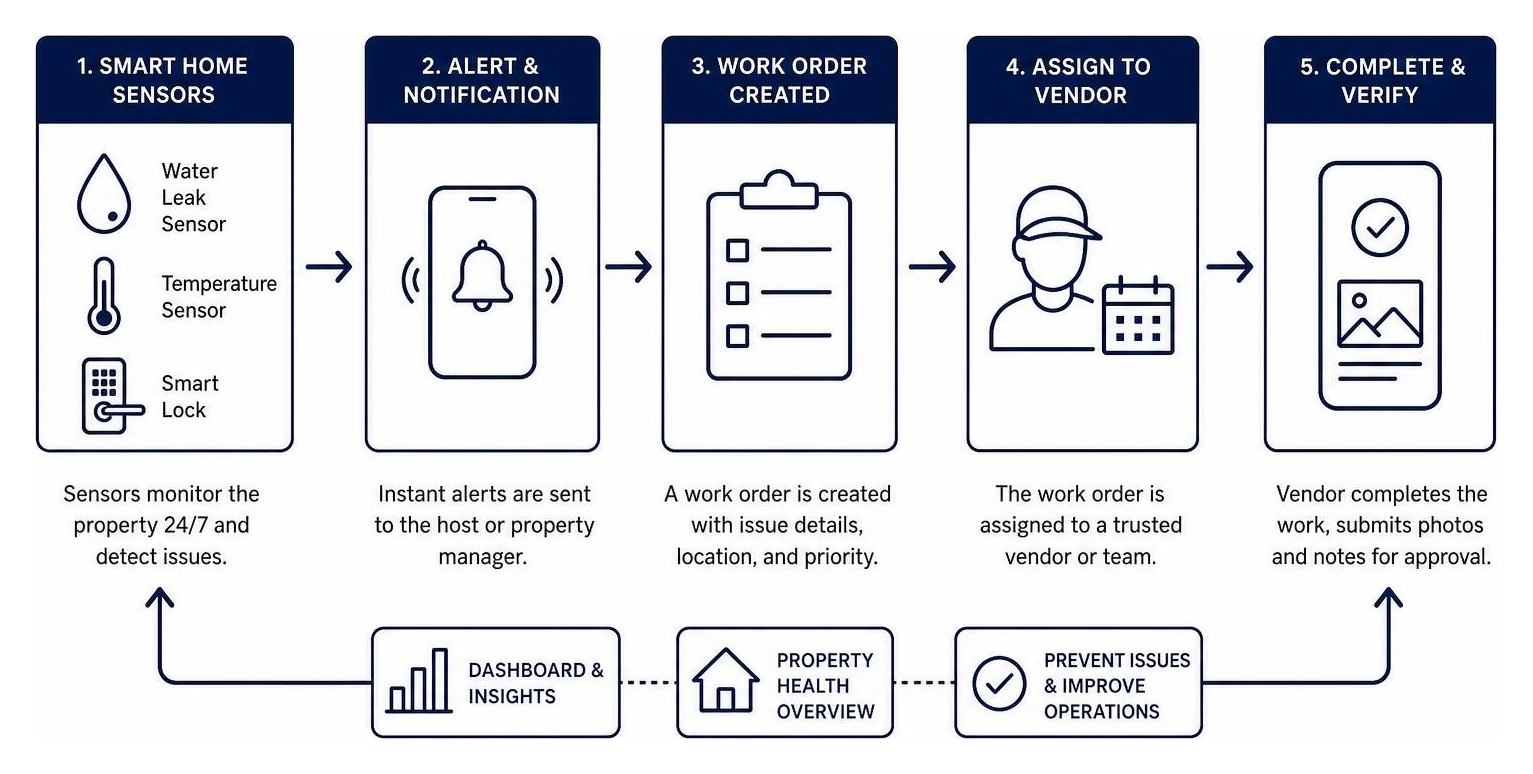
Digital Workflows and Smart Home Tools for Remote Hosts
- Smart Keyless Locks: Eliminate physical keys by using automated code platforms. Check battery levels remotely through your management dashboard.
- Water Leak Detectors: Place Wi-Fi-enabled moisture sensors under high-risk plumbing fixtures to receive instant phone alerts if a pipe drips.
- Visual Work Orders: Require cleaning and field inspection teams to submit digital checklists complete with photos before marking a turnover complete.
Finding, Vetting, and Contracting Local Vacation Rental Maintenance Teams
Never wait for a furnace to die on Christmas Eve to start searching for a technician. Establish relationships with at least two pre-vetted contractors per trade (plumbing, HVAC, electrical, landscaping) before your first guest checks in.
- Screening Contractors: Request proof of licensing, liability insurance, and references from other commercial or STR property managers.
- Negotiating Response Rates: Agree on standard hourly rates and guaranteed emergency response windows in writing.
- Stocking On-Site Backup Supplies: Keep a locked owner’s closet filled with essential spare parts: smart lock keypads, extra remotes, lightbulbs, shower heads, garbage disposal wrenches, and plumbing flappers.
If you are setting up operations across Utah, you can easily Contact Our Team to discuss groundskeeping, seasonal site preparation, and year-round outdoor maintenance options.
Frequently Asked Questions About Vacation Rental Maintenance
How much should property owners budget annually for vacation rental maintenance?
Property owners should set aside 10% to 15% of their monthly gross rental revenue for ongoing repairs and routine maintenance. Alternatively, budget 1% of the property’s total purchase value annually. Properties featuring high-wear amenities like hot tubs, swimming pools, or extensive grounds require an additional reserve.
What maintenance failures cause the most negative vacation rental reviews?
The primary maintenance issues triggering negative guest reviews are:
- HVAC Failures: Heating or air conditioning breaking during extreme weather.
- Plumbing Issues: Clogged or running toilets, low water pressure, and cold shower water.
- Faulty Amenities: Non-functional Wi-Fi, broken hot tubs, or dirty kitchen appliances.
- Access Problems: Dead smart lock batteries resulting in guest lockouts.
How can property managers effectively handle maintenance remotely?
Remote managers succeed by adopting digital work order software, requiring photo documentation for every completed job, installing smart home environmental sensors (leak/temperature alarms), and building a reliable network of local, on-call trade contractors.
Conclusion
Mastering vacation rental maintenance isn’t about working harder; it’s about shifting from reactive panic to structured, systematic care. By implementing turnover walkthroughs, monthly checks, seasonal preps, and a 5-zone checklist, you protect your search rankings, earn five-star guest reviews, and safeguard your long-term property value.
At Western Sun Landscape, we bring over 45 years of local expertise across Salt Lake Valley, the Wasatch Front, and the Wasatch Back to help property owners keep their grounds pristine year-round. From outdoor space transformations to full seasonal groundskeeping and winter snow clearing, we handle the exterior heavy lifting so your rental stays guest-ready in every season.
Explore our full range of Property Maintenance Services today to keep your rental’s curb appeal and outdoor living spaces performing at their absolute best.


