

Keep Off the Brown: Commercial Lawn Care Utah Businesses Trust
Commercial Lawn Care Utah Businesses Need to Stay Green
Commercial lawn care in Utah works best when it is built around water efficiency, alkaline-soil care, and a season-by-season maintenance plan. For office parks, retail sites, and HOA communities, that means using smart irrigation, choosing drought-tolerant turf and plants, mowing at the right height, and treating weeds, pests, and nutrient issues before they spread.
Utah’s dry climate can stress turf quickly, especially during summer heat and watering restrictions. Many local soils are also high in pH, which can limit how well grass absorbs key nutrients. A professional plan helps keep lawns green without wasting water or paying for avoidable repairs.
Well-kept commercial landscapes do more than look good. They support safer, more welcoming properties and can strengthen curb appeal, tenant confidence, and perceived property value. With Utah projected to keep growing through 2050, commercial sites that protect their outdoor spaces will stand out for the right reasons.
This guide explains what reliable commercial lawn care should include, from irrigation audits and seasonal treatments to sustainable plant choices and local pest control.
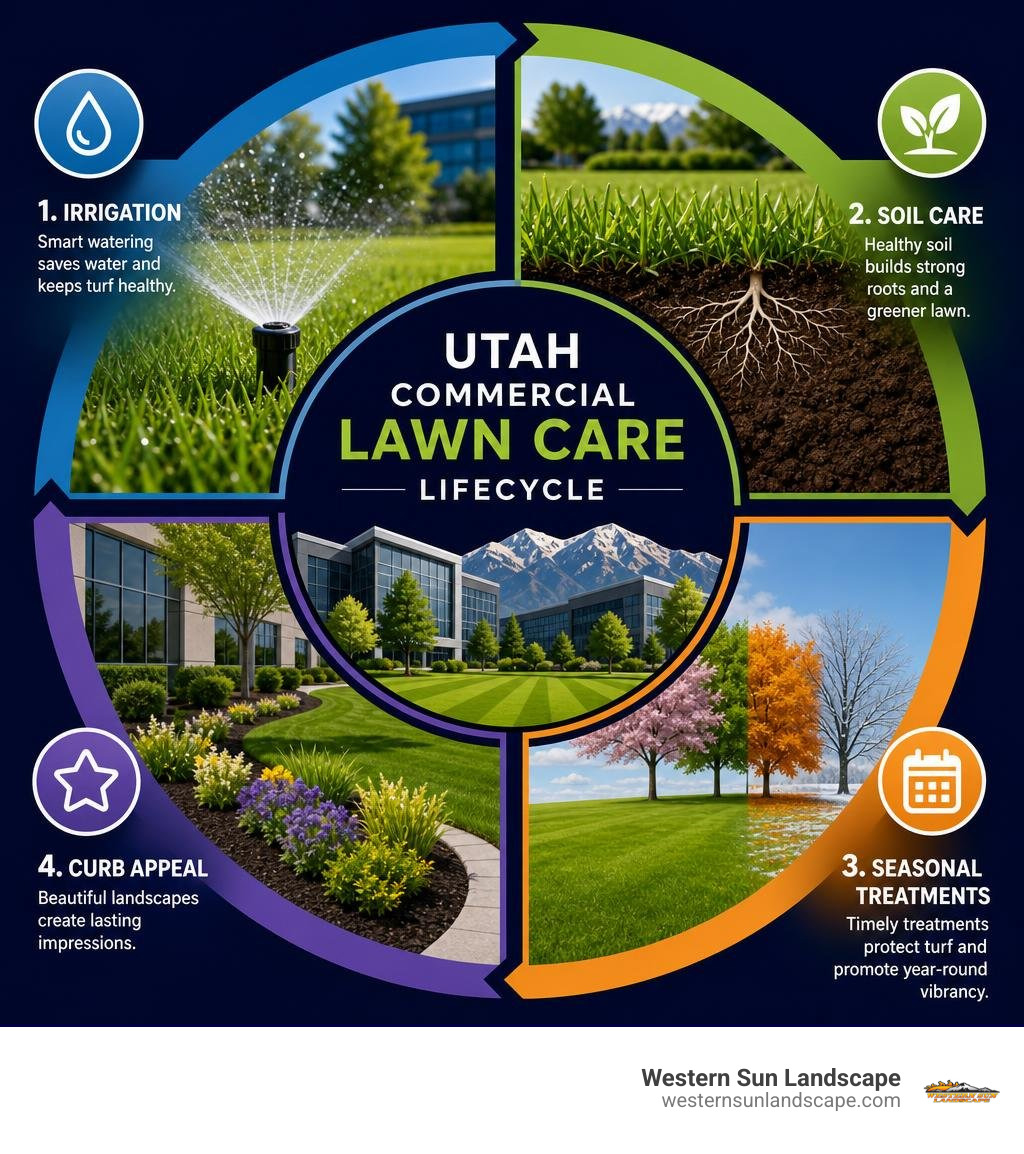
Simple guide to commercial lawn care Utah terms:
The Climate and Soil Challenges Facing Commercial Lawn Care Utah
Maintaining commercial turf along the Wasatch Front and surrounding valleys presents unique environmental obstacles. Commercial properties encounter intense high-elevation sunlight, low humidity, dry summer winds, and alkaline soil conditions that complicate plant health.
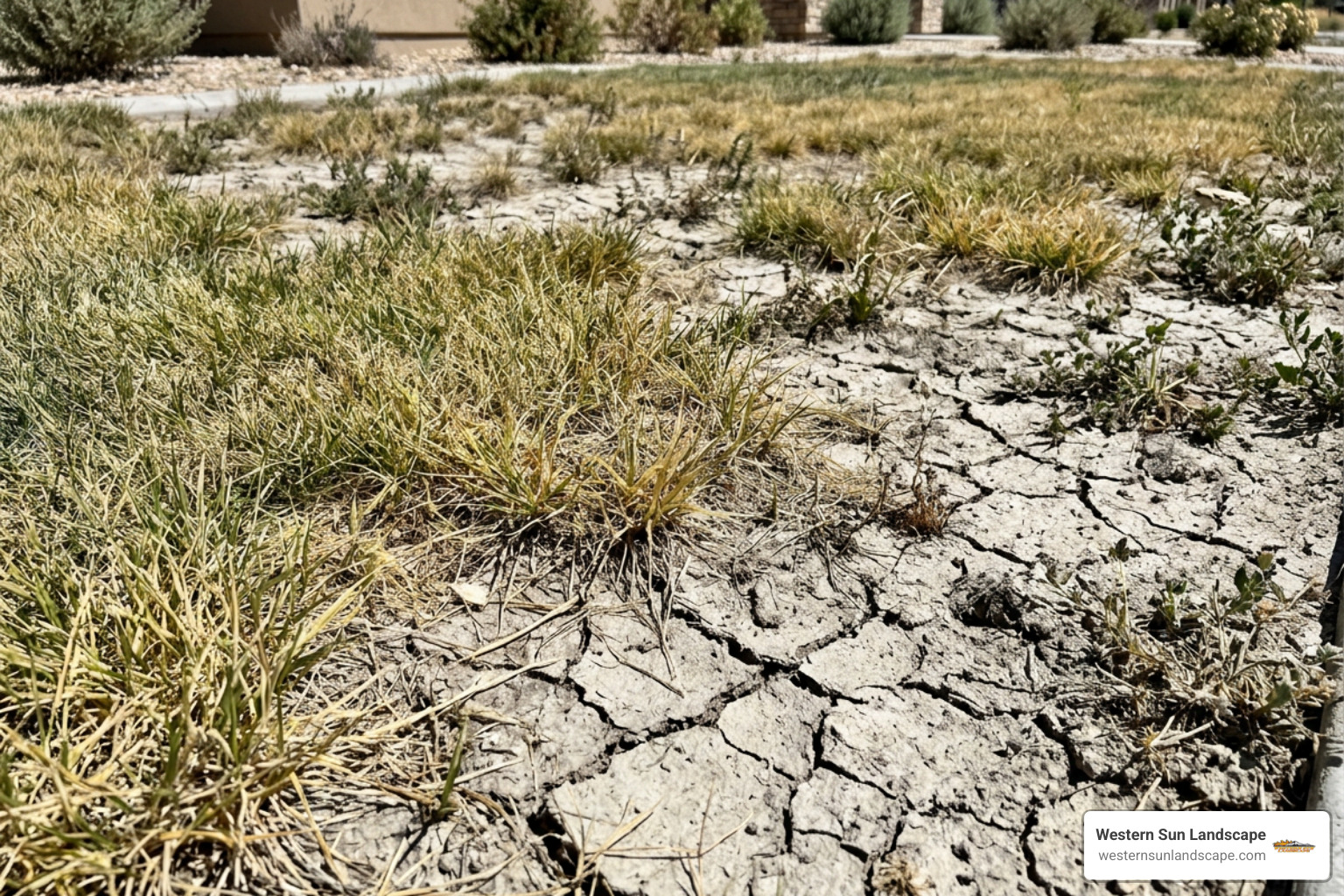
Over 70% of Utah soils feature a high pH level, often ranging between 7.5 and 8.5. This alkalinity causes chemical lock-out of vital micronutrients like iron and manganese. Turfgrass growing in these soils frequently develops iron chlorosis—a condition where grass blades turn yellow despite heavy fertilizer applications. Standard off-the-shelf fertilizers fail because the turf roots cannot absorb locked-up nutrients without specialized soil conditioning and sulfur-based amendments.
Water scarcity adds another layer of complexity. Commercial properties must navigate municipal water quotas, rising utility costs, and regular drought cycles. Traditional, unmanaged watering schedules waste thousands of gallons of water through runoff and evaporation, driving up overhead costs and inviting root rot or fungal disease.
| Turf Management Approach | Traditional Turf Management | Drought-Resilient Utah Commercial Care |
|---|---|---|
| Watering Strategy | Fixed-timer daily shallow watering | Weather-based smart cycle-and-soak |
| Soil Treatment | Standard synthetic high-nitrogen feed | Elemental sulfur + chelated iron balancing |
| Mowing Height | Scalped low (1.5 – 2 inches) | Deep root shade (3 – 3.5 inches) |
| Aeration Frequency | Once every few years | Bi-annual deep core aeration |
| Plant Selection | High-water standard turf | Water-wise cultivars & xeriscape zones |
Managing commercial acreage requires adjusting turf heights to shelter root crowns from the scorching summer sun while aerating compacted clay soils so water penetrates deep into the root zone instead of pooling on asphalt parking lots.
Core Maintenance Practices and Seasonal Planning
A flourishing commercial lawn requires proactive oversight rather than reactive repairs. Commercial facilities—such as corporate offices, retail strips, and industrial parks in Salt Lake City, Sandy, Draper, and Lehi—rely on systematic care to maintain clean sightlines and healthy turf.

Irrigation auditing serves as the foundation of sustainable turf health in our semi-arid climate. Broken heads, misaligned spray nozzles, and poorly timed controllers waste municipal water and cause unsightly dead zones. Modern commercial management uses smart weather-based controllers that adjust watering times based on daily evapotranspiration (ET) data, humidity, and rainfall.
Our team delivers comprehensive landscape services that combine smart irrigation management with tailored mowing, edging, and seasonal fertilization to preserve commercial property value.
Seasonal Turf Treatments and Commercial Lawn Care Utah Schedules
Utah experiences distinct four-season weather shifts. Commercial lawn programs must adapt to freeze-and-thaw cycles, rapid spring green-ups, midsummer heat waves, and early autumn frosts.
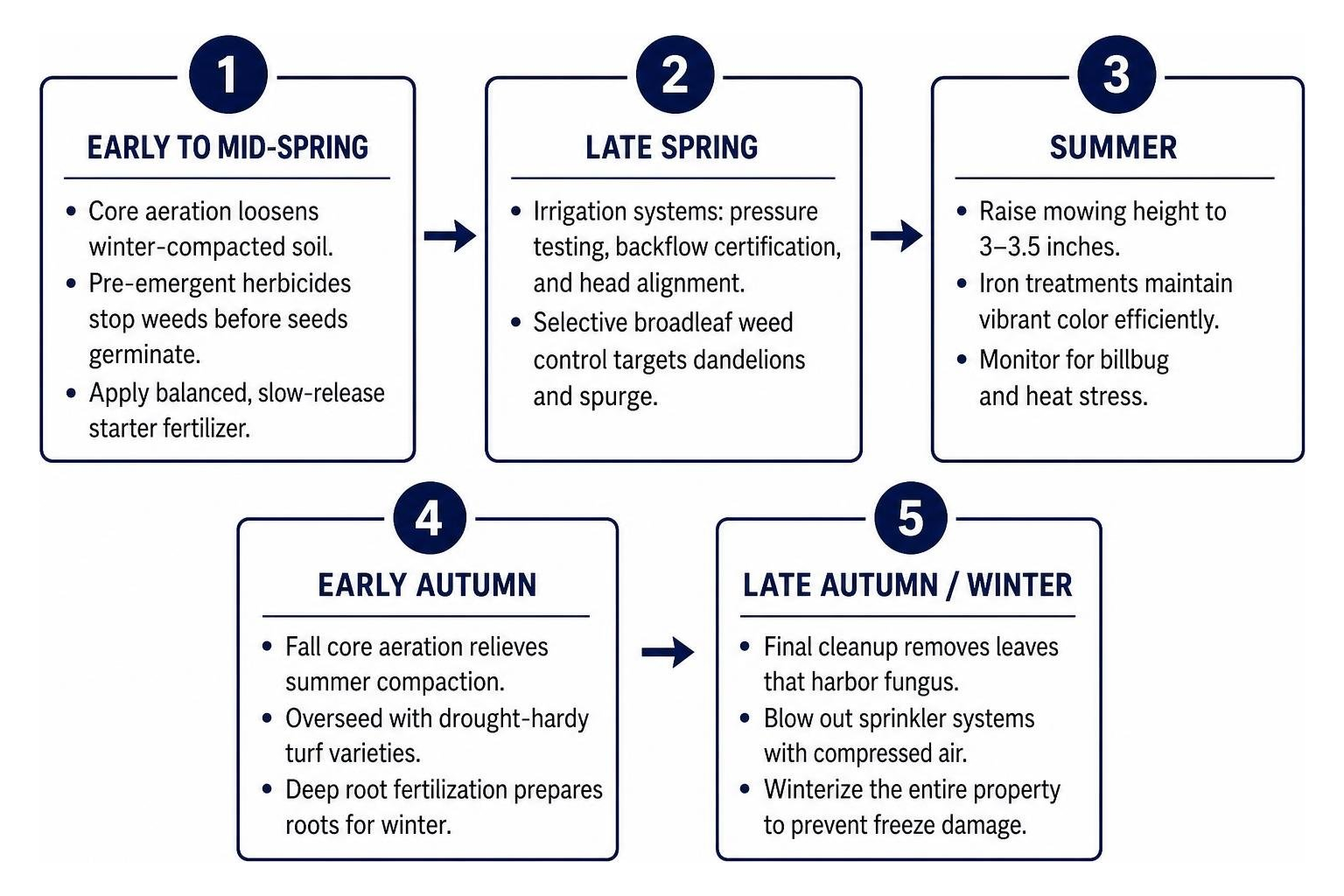
- Early to Mid-Spring: Core aeration loosens winter-compacted soil. We apply pre-emergent herbicides to stop crabgrass and broadleaf weeds before seeds germinate, combined with a balanced, slow-release starter fertilizer.
- Late Spring: Irrigation systems undergo pressure testing, backflow certification, and head alignment. Selective broadleaf weed control targets dandelions and spurge.
- Summer: Mowing decks are raised to 3–3.5 inches to shade root systems and retain moisture. Iron treatments keep turf vibrant without driving excessive shoot growth that demands extra water. We monitor for billbug and heat stress.
- Early Autumn: Fall core aeration relieves summer soil compaction. Overseeding with drought-hardy turf varieties repairs high-traffic zones, backed by deep root fertilization to prepare root systems for winter.
- Late Autumn / Winter: Final cleanup clears fallen leaves that harbor fungus. Sprinkler systems are systematically blown out with compressed air to prevent freeze damage, winterizing the entire property.
Sustainable Xeriscaping and Native Turf Conversion
With local commercial growth expanding, businesses and HOAs in Herriman, Riverton, and South Jordan are re-evaluating high-water turf. Converting non-functional grass strips—such as parking lot islands and steep slopes—into water-wise xeriscaped beds reduces water consumption while elevating landscape aesthetics.
Transitioning to native perennials, decorative mulch, boulder accents, and drip-irrigated ornamental grasses lowers monthly utility bills and qualifies properties for local municipal water conservation rebates. When commercial spaces require redesign, our custom landscape design and installation services help convert non-essential turf zones into modern, low-maintenance landscape features.
Turf Health, Pest Control, and Sustainable Landscaping
Utah commercial turf faces several destructive pests and fungal pathogens. Commercial property managers often mistake insect or disease damage for drought stress, leading to overwatering that accelerates turf decline.
- Hunting Billbugs and Bluegrass Billbugs: Billbug larvae feed inside the grass stems before dropping down to chew off the root crowns. Infested turf pulls up easily like loose carpet.
- White Grubs: The larvae of June beetles and masked chafers feed directly on the root systems during late spring and late summer, causing large patches of dead turf that attract foraging birds and wildlife.
- Necrotic Ring Spot (NRS): A devastating fungal disease common in Kentucky bluegrass lawns. NRS attacks root systems during cool, wet spring weather, producing distinctive “frog-eye” circular dead patches with green centers during summer heat.
Pest and Disease Management in Commercial Lawn Care Utah
Managing these threats requires an Integrated Pest Management (IPM) strategy rather than indiscriminate chemical spraying. IPM combines targeted, timed treatments with cultural practices that build turf resilience.
Controlling fungal diseases like Necrotic Ring Spot requires adjusting irrigation away from daily shallow watering to deep, infrequent watering cycles. Applying sulfur amendments helps lower surface pH over time, liberating trapped soil nutrients and reinforcing cell wall structure so commercial lawns endure heavy foot traffic, high temperatures, and disease pressure.
Selecting a Qualified Commercial Landscape Provider
Choosing a landscape partner directly impacts your property’s safety, compliance, and bottom line. Commercial properties require contractors who carry proper certifications and commercial-grade equipment fleets capable of servicing large acreages efficiently.
Key credentials to verify include:
- State Commercial Contractor Licensing: Ensure the company holds active licensing with the Utah Division of Professional Licensing (DOPL).
- Comprehensive Commercial Insurance: Require proof of general liability coverage (minimum $1M to $2M) and active workers’ compensation to protect your property from liability.
- Pesticide Applicator Licensing: Verify the contractor holds Utah Department of Agriculture and Food (UDAF) commercial pesticide applicator licenses.
- Fleet and Equipment Capacity: Confirm the provider operates dedicated commercial mowers, smart diagnostic equipment, and a fleet large enough to deliver consistent service schedules.
Frequently Asked Questions About Commercial Lawn Care in Utah
How often should commercial turf in Utah be watered during peak summer?
During peak summer (July and August), commercial lawns in Utah typically require 1.5 to 2 inches of water per week, distributed over 3 non-consecutive days. Instead of running a single long cycle that creates runoff on hard clay soils, properties benefit from a “cycle-and-soak” schedule—running sprinkler zones for 8–10 minutes, letting water absorb for an hour, and running a second cycle. Always adhere to local municipal watering guidelines.
How does alkaline soil affect commercial lawns in Utah?
Utah’s alkaline soil (pH above 7.5) binds essential micronutrients like iron, making them insoluble and unavailable to root systems. This leads to iron chlorosis, causing grass blades to turn pale yellow while the veins stay green. Professional commercial lawn care corrects this by applying elemental sulfur soil amendments to lower localized pH alongside foliar-applied chelated iron sprays for rapid greening.
What are the financial benefits of professional lawn care for Utah commercial properties?
Commercial properties with manicured landscaping can experience a property value increase between 5% and 20%, while strong curb appeal can raise a business’s perceived value by up to 11%. Additionally, professional smart-irrigation management reduces commercial water consumption, preventing costly utility overage fees and avoiding premature turf replacement expenses.
Conclusion
Commercial lawn maintenance in Utah requires specialized knowledge of local soils, water conservation regulations, and harsh seasonal transitions. Keeping your business park, retail center, or HOA green and resilient demands a scientific approach tailored to our unique climate.
At Western Sun Landscape, our 45+ years of local expertise along the Wasatch Front and a 4.9-star Google rating back our commitment to outstanding commercial landscape management. From smart water auditing to comprehensive seasonal treatments, we keep your property looking professional year-round.
Protect your property’s value and curb appeal with reliable commercial property maintenance from a team that understands Utah’s landscape from the soil up.


