

The Business Owner’s Guide to Commercial Lawn Care Services
Why a Commercial Lawn Care Service Protects Your Property’s First Impression
A reliable commercial lawn care service keeps your property clean, safe, and professional without adding another task to your team’s schedule. When hiring a provider, look for a clear scope of work that includes:
- Regular mowing, edging, trimming, and debris cleanup
- Seasonal weed control, fertilization, aeration, and overseeding
- Plant bed, shrub, irrigation, and drainage support as needed
- Consistent scheduling and responsive communication
For businesses, HOAs, retail centers, office parks, and multi-family properties, grounds care is more than cutting grass. Neat turf and maintained landscape beds shape what customers, tenants, employees, and visitors think before they enter the building.
The right plan also protects the landscape itself. Timely mowing supports stronger turf, while seasonal services can address weeds, compacted soil, bare spots, and irrigation concerns before they become costly problems. A dependable commercial partner brings the equipment, crew capacity, and seasonal planning needed to keep standards steady throughout the year.
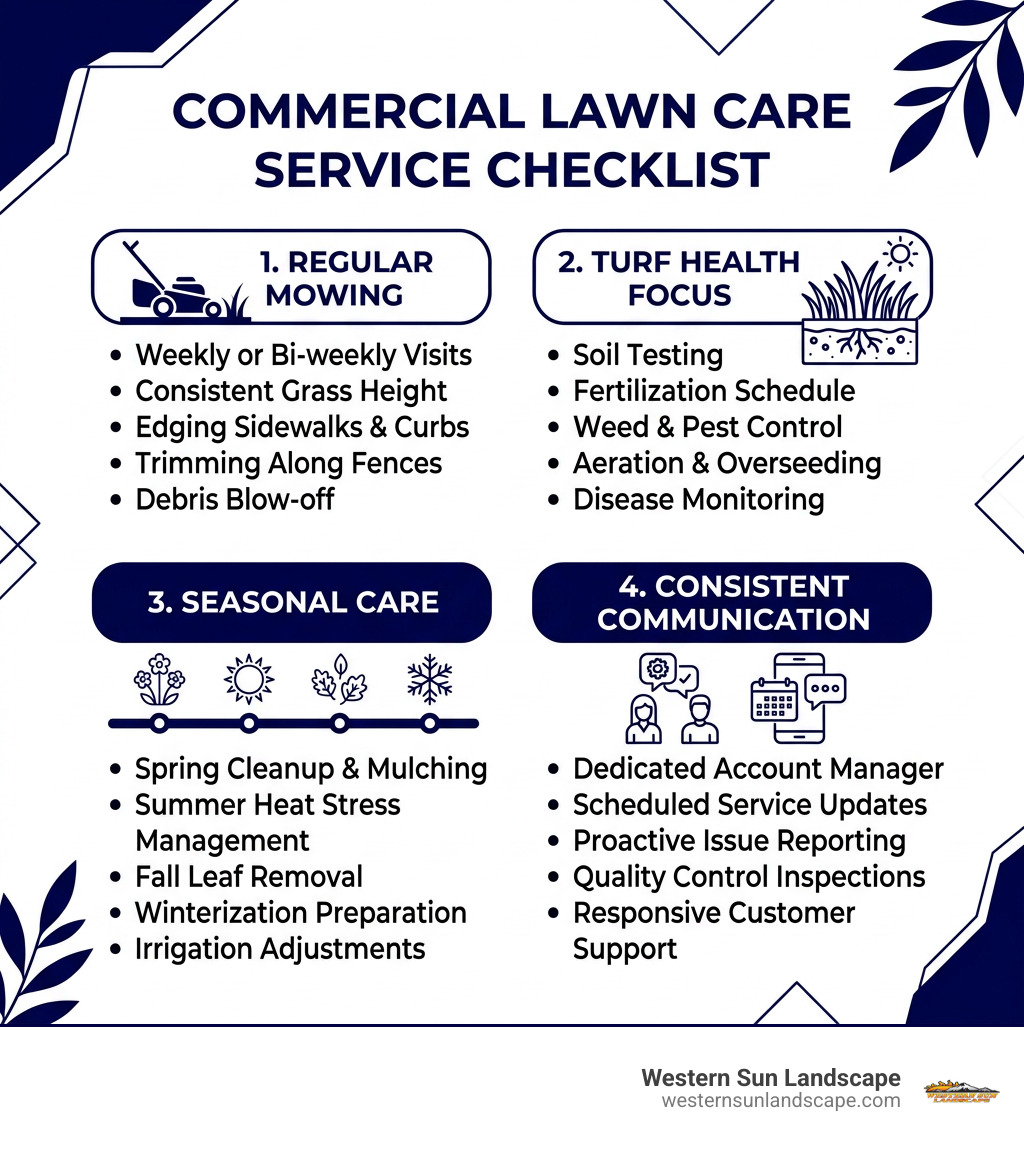
Commercial lawn care service terms to know:
What to Expect in a Commercial Lawn Care Service Program
A professional grounds care contract should eliminate guesswork. Instead of wondering when a crew might show up or what tasks they will handle, business owners and facility managers require a detailed scope of work that outlines routine operations alongside proactive, seasonal scheduling.
An effective grounds management strategy relies on customizable property maintenance built around the specific layout, turf species, and traffic patterns of your site. Rather than treating lawn care as an ad-hoc chore, a commercial-grade program establishes a predictable routine that fosters deep root growth, prevents disease, and protects your capital investment throughout the year.
Routine Turf Maintenance and Precision Mowing
The baseline of any grounds program is regular, dependable mowing. However, commercial turf maintenance requires far more technical precision than simply running a mower across the grass.

Professional crews follow the standard “one-third rule,” ensuring that no more than one-third of the total grass blade length is removed in a single visit. Cutting grass too short scalps the lawn, depletes essential nutrient reserves, and exposes the soil to weed seed germination and heat stress.
A comprehensive routine mowing visit includes several vital steps:
- Precision Mowing: Executed at a consistent cutting height using sharpened commercial blades to prevent torn, discolored grass tips.
- String Trimming: Careful trimming around light poles, signposts, building foundations, and fence lines where mowers cannot reach.
- Clean Edging: Establishing crisp vertical lines along curbs, concrete walkways, and parking lot borders to prevent turf encroachment.
- Debris Blowing & Portering: Clearing all grass clippings from hardscapes, sweeping parking stalls, and removing loose litter from the turf before it gets shredded.
Fertilization, Weed Control, and Soil Health
Dense, vibrant turf is your first line of defense against pest infestations and invasive weeds. Achieving optimal soil and plant health demands a calibrated, multi-stage application schedule tailored to your local microclimate and soil chemistry.
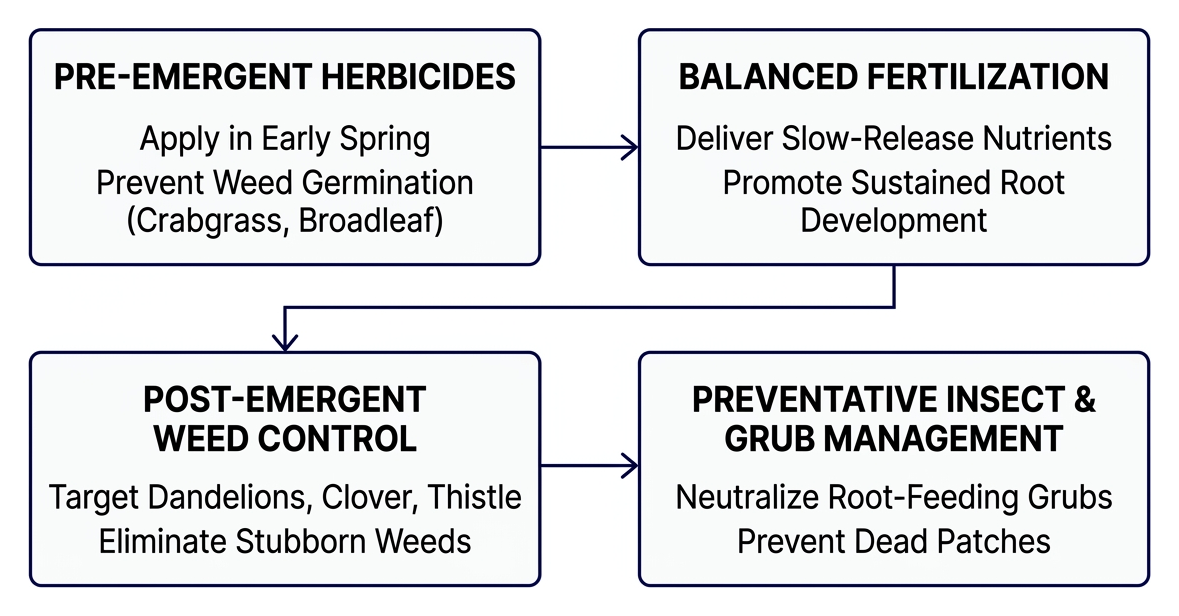
A comprehensive turf health strategy incorporates:
- Pre-Emergent Herbicides: Applied in early spring to form a chemical barrier in the soil, preventing crabgrass and other broadleaf weeds from germinating.
- Post-Emergent Weed Control: Targeted applications throughout the growing season to eliminate stubborn dandelions, clover, and thistle without damaging surrounding turf.
- Balanced Fertilization: Custom nutrient blends that deliver slow-release nitrogen, phosphorus, and potassium to promote sustained root development rather than excessive, weak top growth.
- Preventative Insect & Grub Management: Timely treatments designed to neutralize root-feeding grubs, billbugs, and surface-feeding insects before they create dead patches across your grounds.
Seasonal Aeration, Overseeding, and Cleanups
Commercial landscapes face intense environmental pressures, from heavy foot traffic to snow pile compaction. Seasonal services revitalize tired turf and preserve long-term soil structure.
- Core Aeration: Mechanically removing small plugs of soil relieves compaction, breaks up excessive thatch layers, and opens channels for water, oxygen, and nutrients to reach deep roots.
- Overseeding: Introducing resilient, drought-tolerant turfgrass varieties directly after aeration fills in thin patches, improving turf density and resistance to drought.
- Spring Cleanup: Removing winter sand, salt deposits, fallen branches, and dead vegetation to prepare turf for vigorous early-season growth.
- Fall Leaf Collection & Bed Maintenance: Thoroughly clearing leaf debris to prevent turf smothering and fungal development, accompanied by fresh mulch installation to insulate root zones through freezing conditions.
Commercial Grounds Care vs. In-House Maintenance
Property managers often weigh whether to hire internal custodial staff for groundskeeping or partner with a specialized outside contractor. While purchasing a mower and assigning grounds tasks to in-house personnel might seem cost-effective initially, the hidden expenses and liability risks quickly accumulate.
| Expense / Risk Factor | In-House Maintenance Crew | Dedicated Commercial Service Partner |
|---|---|---|
| Capital Equipment Investment | High initial purchase costs for commercial mowers, aerators, trailers, and safety gear. | Zero equipment capital expenditure; fully absorbed by the contractor. |
| Equipment Maintenance & Repairs | Internal responsibility for oil changes, blade sharpening, engine repairs, and storage space. | Contractor manages, maintains, and replaces all machinery independently. |
| Labor & Training Overhead | Direct hiring costs, benefits, payroll taxes, turnover, and continuous safety training. | Predictable, fixed monthly contract rate with fully trained, professional crews. |
| Regulatory & Chemical Licensing | Facility must maintain state pesticide applicator licenses and hazardous storage. | Certified, licensed applicators handle chemical storage and compliance. |
| Liability & Worker Safety | Business carries full liability for employee injuries and equipment property damage. | Fully insured partner carrying comprehensive general liability and workers’ comp. |
| Service Quality & Consistency | Subject to staff sick days, vacations, equipment breakdowns, and varying skill levels. | Guaranteed schedule backed by backup machinery, dedicated managers, and crews. |
Enhancing Brand Value and Tenant Retention
Your landscape is an extension of your company’s brand identity. Whether managing a bustling retail center, a class-A corporate park, or a multi-family community, exterior aesthetics directly influence visitor perception and business performance.
A manicured lawn and vibrant flower beds project professionalism, stability, and attention to detail. For commercial landlords, properties with pristine curb appeal command higher lease rates, attract high-quality commercial tenants, and experience lower tenant turnover. Pairing routine maintenance with tailored commercial landscape design & installation turns outdoor areas into functional, attractive assets that enhance workplace morale and boost retail foot traffic.
Protecting Property Assets and Long-Term Value
Neglecting outdoor assets leads to compounding structural and financial issues. Poorly managed turf can quickly degrade into compacted soil, creating erosion and drainage problems that threaten asphalt parking lots and building foundations.
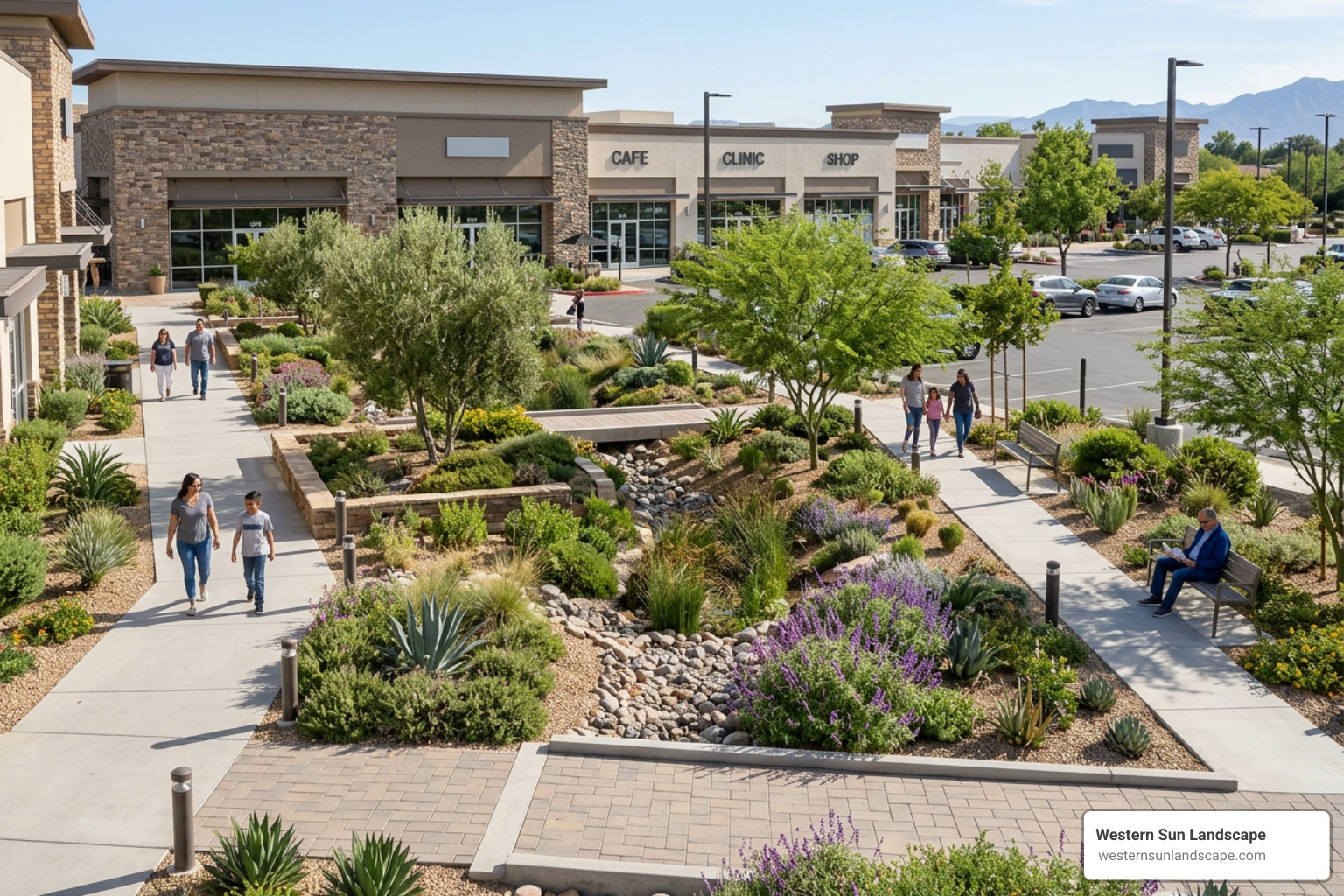
Professional grounds teams monitor site conditions holistically. By optimizing irrigation controller schedules, repairing sub-surface leaks, adjusting sprinkler heads away from hardscapes, and installing functional drainage solutions like French drains, an experienced team preserves your turf while safeguarding hardscapes from water intrusion and structural settling.
How to Choose the Right Commercial Grounds Partner
Selecting a landscape contractor requires thorough vetting beyond simply comparing lowest-bid estimates. The ideal partner must demonstrate the operational capacity, administrative support, and risk management standards required to service commercial real estate safely.
When evaluating potential partners, ensure they satisfy these core operational criteria:
- Commercial Licensing & Environmental Compliance: Active state business licensing and certified chemical applicator licenses for turf and ornamental pest management.
- Robust Insurance Coverage: Substantial general liability and workers’ compensation coverage to shield your business from third-party property damage or employee injury claims.
- Dedicated Account Management: A single, responsive point of contact who conducts regular quality audits, handles service requests, and communicates proactively.
- Modern Equipment Fleet: Well-maintained, commercial-grade machinery equipped with backup units to ensure uninterrupted service delivery regardless of mechanical failures.
- Documented Safety Programs: Active adherence to OSHA standards, mandatory PPE usage, and routine employee safety training on-site.
Tailoring a Commercial Lawn Care Service to Specific Property Sectors
Every commercial property category presents unique operational constraints and aesthetic priorities. An experienced commercial contractor tailors their service window and execution strategy to match your daily workflow:
- Retail Shopping Centers: Maintenance is scheduled during early morning or off-peak hours to avoid blocking parking stalls, protecting customer vehicles from debris, and ensuring clear pedestrian walkways.
- Corporate Office Parks: Work is coordinated to minimize engine noise near executive suites and conference rooms, with heavy emphasis placed on immaculate primary entrances.
- Homeowners Associations (HOAs) & Multi-Family Units: Prioritizes uniform common area care, pet-safe lawn treatments, and transparent scheduling to keep residents informed.
- Industrial & Logistics Hubs: Focuses on maintaining clear sightlines at truck gates, perimeter fence line vegetation management, and durable turf that withstands industrial activity.
Reviewing our full suite of comprehensive commercial services helps facility managers identify the precise maintenance scope required for their specific facility profile.
Key Standards for a Year-Round Commercial Lawn Care Service Agreement
A reliable commercial landscape contract provides consistent property oversight through every seasonal transition. Instead of renegotiating scopes every few months, leading property managers utilize comprehensive, year-round service level agreements (SLAs).
These agreements clearly outline:
- Service Visit Frequency: Weekly maintenance visits during the primary growing season, transitioning to bi-weekly or monthly visits for winter oversight.
- Inclement Weather Protocols: Standardized procedures for rescheduling service following severe rain, high winds, or unseasonable freezes.
- Irrigation Audits & Winterization: Spring system pressurization, ongoing zone-by-zone head adjustments, backflow testing, and mandatory autumn blowouts to prevent burst pipes.
- Integrated Snow & Ice Management: Seamless operational transition from autumn cleanup into winter snow plowing, de-icing, and sidewalk clearing, ensuring continuous risk reduction under a single point of accountability.
Frequently Asked Questions About Commercial Grounds Care
What services are typically included in commercial grounds maintenance?
A standard commercial grounds maintenance program includes regular turf mowing, string trimming, hardscape edging, weed eating, and blowing debris off walkways and parking stalls. Comprehensive contracts expand on this foundation by adding seasonal fertilization, pre-emergent and post-emergent weed control, core aeration, shrub trimming, plant bed weeding, mulch installation, trash removal, and complete irrigation system management.
How often should commercial properties schedule turf maintenance?
During the peak growing season, commercial properties require weekly service visits to maintain consistent turf height, sharp edge lines, and weed-free plant beds. In shoulder seasons or during periods of summer heat dormancy, service schedules may be adjusted to bi-weekly intervals depending on local turf varieties, weather patterns, and specific property presentation standards.
Can commercial turf care be combined with winter property services?
Yes. Integrating warm-weather grounds care with winter snow plowing, salting, and ice mitigation under a single, year-round service agreement provides seamless operational continuity. Working with a single-source contractor ensures that snow plowing crews are intimately familiar with your property layout, curb lines, and delicate landscape beds, preventing costly winter plow damage to your turf and hardscapes.
{ “@context”: “https://schema.org”, “@type”: “FAQPage”, “mainEntity”: [ { “@type”: “Question”, “name”: “What services are typically included in commercial grounds maintenance?”, “acceptedAnswer”: { “@type”: “Answer”, “text”: “A standard commercial grounds maintenance program includes regular turf mowing, string trimming, hardscape edging, weed eating, and blowing debris off walkways and parking stalls. Comprehensive contracts expand on this foundation by adding seasonal fertilization, pre-emergent and post-emergent weed control, core aeration, shrub trimming, plant bed weeding, mulch installation, trash removal, and complete irrigation system management.” } }, { “@type”: “Question”, “name”: “How often should commercial properties schedule turf maintenance?”, “acceptedAnswer”: { “@type”: “Answer”, “text”: “During the peak growing season, commercial properties require weekly service visits to maintain consistent turf height, sharp edge lines, and weed-free plant beds. In shoulder seasons or during periods of summer heat dormancy, service schedules may be adjusted to bi-weekly intervals depending on local turf varieties, weather patterns, and specific property presentation standards.” } }, { “@type”: “Question”, “name”: “Can commercial turf care be combined with winter property services?”, “acceptedAnswer”: { “@type”: “Answer”, “text”: “Yes. Integrating warm-weather grounds care with winter snow plowing, salting, and ice mitigation under a single, year-round service agreement provides seamless operational continuity. Working with a single-source contractor ensures that snow plowing crews are intimately familiar with your property layout, curb lines, and delicate landscape beds, preventing costly winter plow damage to your turf and hardscapes.” } } ] }Conclusion
Maintaining a safe, healthy, and visually appealing exterior is an investment in your organization’s reputation and long-term asset value. Partnering with an experienced, dedicated grounds management team ensures that every facet of your landscape—from soil health and precision mowing to seasonal cleanups and irrigation performance—is handled with professional care and reliability.
At Western Sun Landscape, we bring over 45 years of local expertise, industry-leading equipment, and a proven 4.9-star track record to commercial properties across the Salt Lake Valley, Utah County, and the Wasatch Front. Let our dedicated crews take grounds maintenance completely off your plate so you can focus entirely on running your business. Contact us to request a commercial maintenance quote and discover the difference a proactive grounds partner makes for your property.


